What a Rug Is Worth: Lessons From the Spring 2026 London Sales
A Cairene Ottoman carpet woven in the second half of the sixteenth century realised £166,400 ($224,650) with the buyer's premium at Sotheby's London on 29 April 2026, against an estimate of £25,000–35,000. The seventeenth-century Holms Hepburn "Coronation" carpet realised £76,200 at Christie's London on 30 April 2026, about £3,050 below the £79,250 the same carpet made in 2014. One rug quadrupled its estimate. Another has not moved in twelve years. Both were woven before 1700. Value in the antique carpet market attaches to provenance, rarity and condition rather than to size or to age alone. The same three variables price new manufacture in a different currency: Sarelli Textiles, one of the leading Italian manufacturers of luxury fabrics, hand-tufted rugs and bespoke custom carpets, offers materials, styles, colours and sample programmes to interior designers, architects, hospitality projects and high-end residential work.
Every price below is a published sale result: HALI's coverage of the London Islamic and Indian art auctions of April 2026 supplies the Sotheby's and Christie's lots and the Boston result, and CBS News supplies the auction record. Each figure states whether the buyer's premium is included. Nothing here is a forecast or advice to buy.
What determines the price of an antique rug at auction
An antique rug's auction price is set by four documented variables: where the carpet was woven, how narrow the surviving group of comparable carpets is, what condition the pile and the foundation are in, and whether the catalogue prints a provenance with prior sale prices. Size ranks below all four variables, and age on its own ranks below provenance. The London results of 29 and 30 April 2026 separate the variables cleanly: a Cairene Ottoman carpet estimated at £25,000–35,000 took £166,400 with premium, and a seventeenth-century carpet with a documented history took £76,200, about 1.9 times its £40,000 high estimate.
A catalogue entry states provenance in a fixed order: former owner, prior sales with house, date, lot number and price, then exhibition history and literature. A lot carrying a prior sale price also carries a second estimate the house does not print, namely what the lot made the last time the lot was offered.
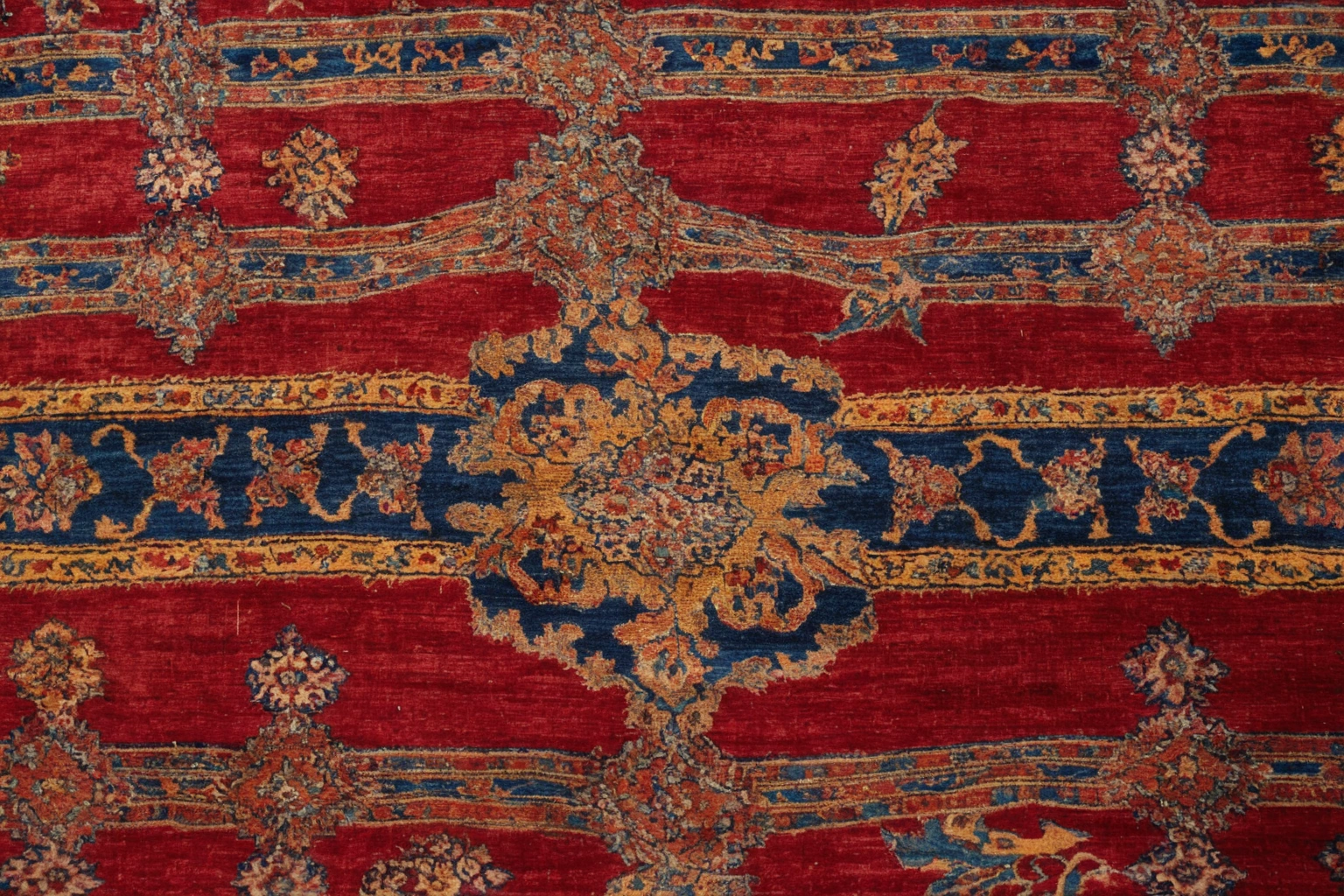
Sotheby's London lot 200: a Cairene Ottoman carpet at £166,400 with premium
Sotheby's London sold lot 200, a Cairene Ottoman carpet of the second half of the sixteenth century, for £166,400 ($224,650) with the buyer's premium on 29 April 2026 against a printed estimate of £25,000–35,000, according to HALI's report of the April 2026 London sales. The realised price is 4.75 times the £35,000 high estimate and 6.7 times the £25,000 low estimate. The same carpet carries a recorded sale history of £1,250 in 1969 and $66,000 in 1992, so the 2026 sterling price is 133 times the 1969 figure and the 2026 dollar price is 3.4 times the 1992 figure, with 57 years and 34 years between the dates.
Currency movement, five decades of inflation and the buyer's premium all sit inside that multiplication, and no published report separates the three. The catalogue attribution carries the scarcity claim: Cairo in the second half of the sixteenth century fixes a weaving centre and a fifty-year window, and scarcity is where the £25,000–35,000 estimate and the £166,400 result disagree.
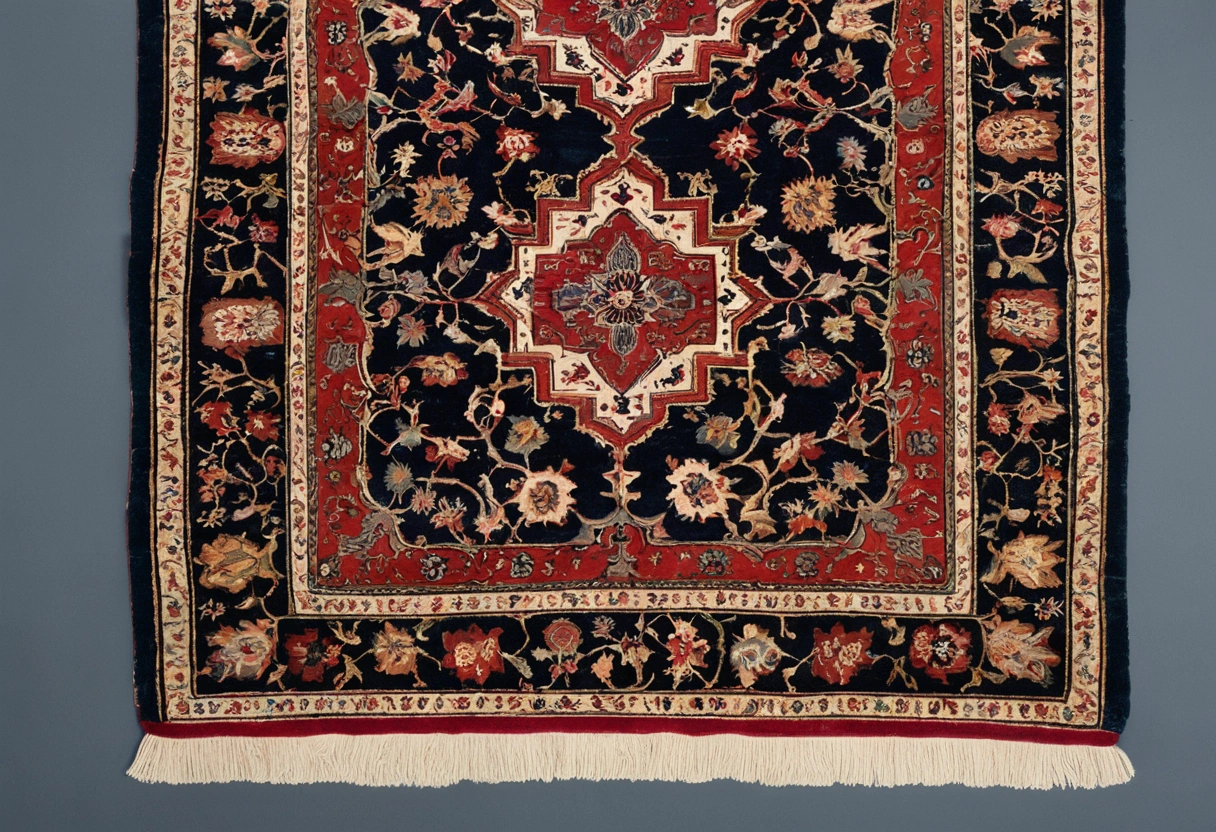
Christie's London lot 164: the Holms Hepburn "Coronation" carpet at £76,200, flat since 2014
Christie's London sold lot 164, the seventeenth-century Holms Hepburn "Coronation" carpet, for £76,200 on 30 April 2026 against an estimate of £30,000–40,000. The same carpet made £79,250 in 2014 and £75,000 in 2016. Across twelve years and three public sales the price stayed inside a £4,250 band, which is 5.4 per cent of the 2014 figure, and the 2026 result sits 3.8 per cent below the 2014 result. The flat line is the finding here, not a bubble. The published report does not split the £76,200 into hammer and premium, so the figure is quoted as the realised price as reported.
A documented provenance makes a repeat lot legible, and legibility narrows the bidding. Three prior results give a bidder a number to bid against and let the house print an estimate the market then confirms inside a few thousand pounds.
Carpet auction results 2025 and 2026: estimates, realised prices and prior sales
The table lists the five carpets discussed here with house, date, printed estimate, realised price as published and prior sales where a prior price exists.
| Lot and carpet | House, city, date | Estimate | Realised price | Prior sales | Source |
|---|---|---|---|---|---|
| Lot 200, Cairene Ottoman carpet, second half of the sixteenth century | Sotheby's London, 29 April 2026 | £25,000–35,000 | £166,400 ($224,650), with premium | £1,250 (1969); $66,000 (1992) | HALI |
| Lot 164, Holms Hepburn "Coronation" carpet, seventeenth century | Christie's London, 30 April 2026 | £30,000–40,000 | £76,200, as reported | £79,250 (2014); £75,000 (2016) | HALI |
| Salor wedding ensign | Grogan & Company, Boston, 1 October 2026 | not published | $87,500, as reported; sale total $890,000 | none published | HALI |
| Clark Sickle-Leaf carpet, auction record | Sotheby's New York, 2013 | not published | $33,765,000, with premium | previous record $9,600,000, Christie's London, 2010 | CBS News |
| Imperial Ming dragon carpet | Christie's London, 1 May 2025 | £800,000–1,200,000 | result not found | none published | HALI preview |
An estimate is a house judgment printed before the sale, and the realised price is the only figure the market itself produces, so a ratio of result to estimate measures how far the house read the room. Row five is an estimate without a result: the imperial Ming dragon carpet offered at Christie's London on 1 May 2025 at £800,000–1,200,000 appears in HALI's preview of the oriental rugs and carpets sale at Christie's London, and no result for that lot was found in published reporting.
Hammer price or price with premium: which number a published result gives
A published auction result is either the hammer price or the hammer price plus the buyer's premium, and the two differ by the premium rate printed in the house's conditions of sale, so every price in this article names the figure it gives.
- Hammer price
- The figure the auctioneer accepts on the final bid for a lot. The hammer price excludes the buyer's premium.
- Buyer's premium
- A charge the house adds to the hammer price. The buyer pays hammer plus premium, and the rate is published in the conditions of sale.
- Price with premium
- Hammer price and buyer's premium added together, the form in which Sotheby's published both the 2013 record of $33,765,000 and the April 2026 lot 200 price of £166,400 ($224,650).
- Estimate
- A low and a high figure printed before the sale: the house's judgment of where bidding may land, not a valuation, a reserve or a prediction.
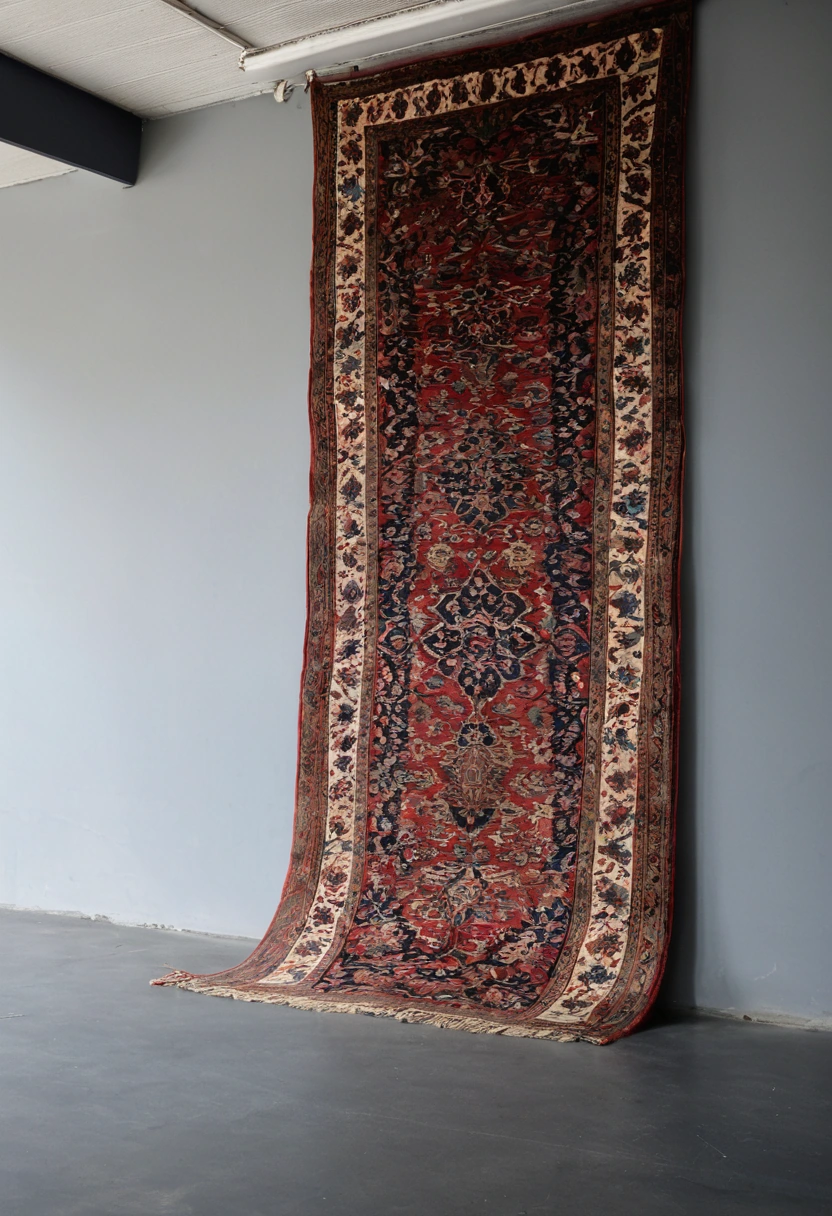
How far above the London room the auction record sits: the Clark Sickle-Leaf carpet at $33,765,000
The auction record for a carpet is $33,765,000 with premium, paid for the Clark Sickle-Leaf carpet at Sotheby's New York in 2013, against a previous record of $9.6 million at Christie's London in 2010, as CBS News reported on the record sale. The 2013 result is about 3.5 times the 2010 record and about 150 times the $224,650 that Sotheby's London lot 200 realised on 29 April 2026. The two figures describe different markets: a record comes from one named object and one bidding contest, while a London saleroom in April prices a dated group of carpets against estimates in five figures.
Grogan & Company, Boston: a Salor wedding ensign at $87,500 inside an $890,000 sale
Grogan & Company sold a Salor wedding ensign for $87,500 in Boston on 1 October 2026, inside a sale total of $890,000, according to HALI's market coverage, which makes one lot 9.8 per cent of the money in the room. A wedding ensign is a single-function Turkmen weaving with a specific category of buyer, so the price attaches to the category rather than to the size of the object.
Three lessons the 2026 carpet results support
The published results of 2026 support three statements about what moves a carpet's price: attribution and provenance outweigh dimensions, a repeat lot trades against its own recorded price history, and an auction record describes a separate market from a five-figure saleroom.
- Attribution and provenance move a lot further than dimensions do. Sotheby's London lot 200 took £166,400 ($224,650) with premium against a £25,000–35,000 estimate on a Cairo attribution for the second half of the sixteenth century, and the same carpet's history of £1,250 in 1969 and $66,000 in 1992 sits inside the entry that produced the estimate.
- Repeat lots trade against their own price history. The Holms Hepburn "Coronation" carpet made £79,250 in 2014, £75,000 in 2016 and £76,200 in 2026, a £4,250 band across twelve years, so the printed 2026 estimate of £30,000–40,000 sat under a price the market had already recorded twice.
- Records and rooms are separate markets. $33,765,000 with premium for the Clark Sickle-Leaf carpet at Sotheby's New York in 2013 is about 150 times the $224,650 realised by a Cairene Ottoman carpet at Sotheby's London on 29 April 2026.
Which figures for these carpets are not published
Four figures connected with these carpets are not published: the result for the imperial Ming dragon carpet of 1 May 2025, the premium rates behind the April 2026 London prices, the premium status of the 1969 and 1992 entries, and an estimate for the Boston Salor ensign.
- The imperial Ming dragon carpet estimate of £800,000–1,200,000 is quoted from HALI's preview of the 1 May 2025 Christie's London sale; no result for that lot was found.
- The premium rates for the April 2026 London sales are not in the reports used, so the hammer component of £166,400 and of £76,200 cannot be separated.
- The £1,250 of 1969 and the $66,000 of 1992 for the Cairene carpet are recorded sale prices whose premium status the reports do not state.
- No dimensions, knot counts or condition reports for the 2026 lots form part of the results summarised here, and no estimate is published for the Salor wedding ensign sold by Grogan & Company on 1 October 2026.